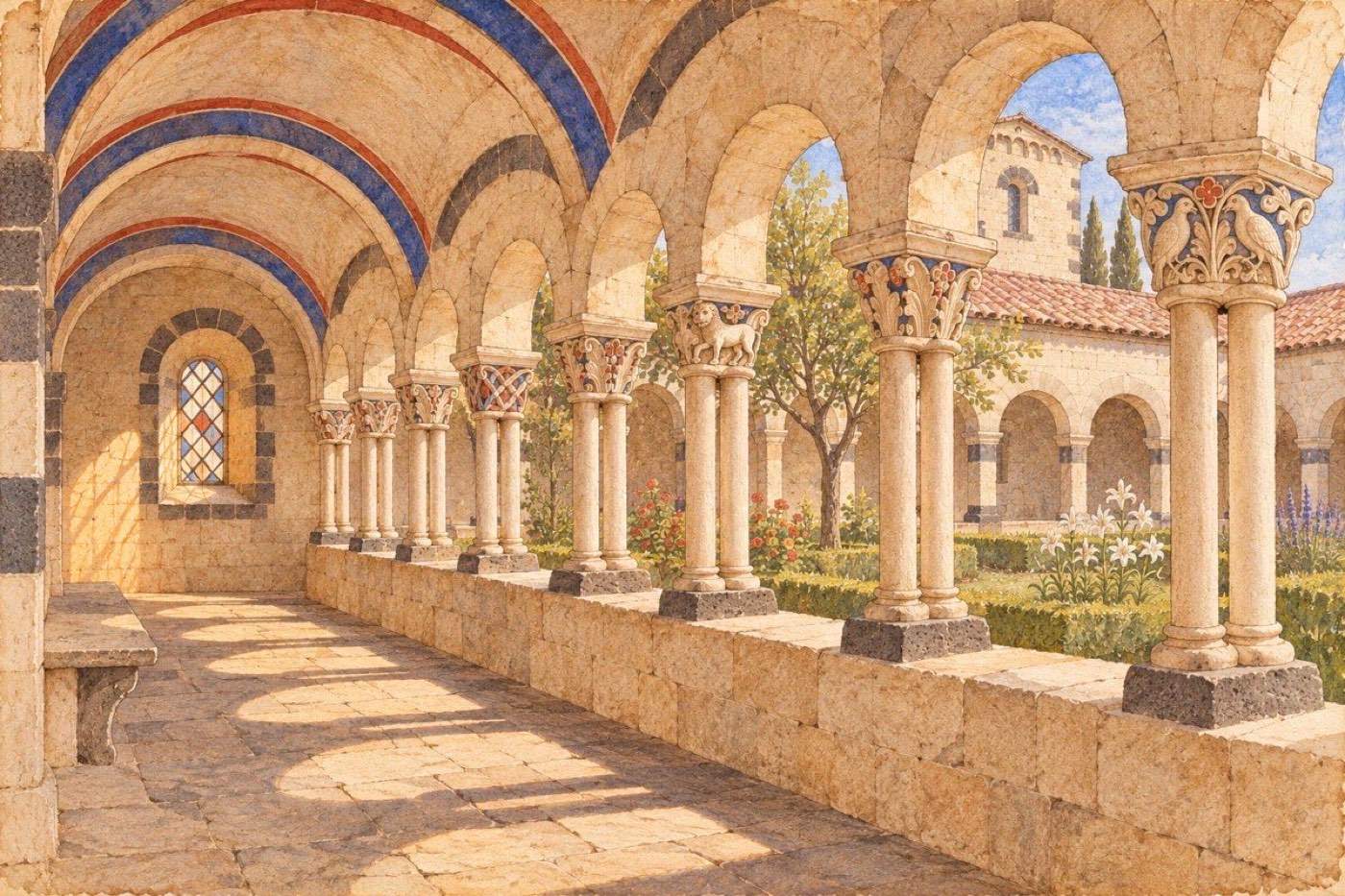
What is a priory? Priory, abbey and monastery compared
What is a priory, and how does it differ from an abbey or monastery? The Cluniac order had one abbot at Cluny, with every other house operating as a dependent priory. The first priories grew out of this arrangement, which illustrates the distinction between a priory and an abbey.
What Is a Priory?
A priory is a monastery of men or women living under religious vows, led by a prior or prioress. Priories exist in the Catholic Church, the Lutheran churches and the Anglican Communion.
The term covers houses of monks and nuns, including Benedictines, Cistercians and Carthusians. Canons regular and mendicant orders also use it, among them Dominicans, Augustinian hermits and Carmelites. In each case, it means a religious house led by a prior or prioress. The word "priory" can also refer to the regional seats of some military orders.
Priory vs Monastery and Abbey
Monastery is the broader term: every priory is a monastery, but not every monastery is a priory. An abbey is a religious community led by an abbot or abbess. The main distinction between an abbey and a priory is therefore who leads the house: an abbot or abbess leads an abbey, while a prior or prioress leads a priory.
In practice, the relationship can be more complex. In the Cluniac order, the abbot lived at Cluny, and all the other houses were dependent priories. The first priories were founded as houses dependent on the abbey of Cluny. In this arrangement, the name reflected the house's dependence on a larger centre.
Conventual and Simple Priories
Benedictines and their offshoots distinguish two kinds of priory. A conventual priory is independent but has no abbot, for example because the community has not reached the canonically required number of twelve monks.
A simple priory, also called an obedientiary priory, depends on an abbey. Its prior answers to the abbot in all matters, and the house is a satellite of the mother abbey. Both kinds are led by a prior; the difference lies in their relationship with an abbey.
To distinguish the two, ask whether the house has its own abbot. If it does not, and the community is independent, it is a conventual priory. Does the prior answer to the abbot of a mother abbey? If so, it is a simple, or obedientiary, priory.
What Makes a Church a Priory Church?
A priory church belongs to a priory, a religious house led by a prior or prioress. The name reflects its connection to that community.
England before the Reformation provides another example. When an abbey church became a cathedral, the abbey became a cathedral priory. The bishop took the abbot's place, and a prior led the community. The house's name thus reflected its structure of authority.
How to Read These Names in Descriptions of Monuments
Ask three questions: Who leads the house, a prior or an abbot? Is it independent, or does it depend on an abbey? Which order does it belong to? The answers help you identify the type of house and understand the terms used to describe it.
Summary
A priory is a monastery led by a prior or prioress, either independent or dependent on an abbey. Conventual priories are independent, while simple priories depend on an abbey. A priory church belongs to a priory, and cathedral priories are known from England before the Reformation. These distinctions make descriptions of monuments and the history of religious orders easier to understand. Read on to learn how to recognise a Romanesque church.